
Clean concrete and paving should look even from one end to the other. Stripes, tide marks and patchy sections are what you get when a large flat area is cleaned with a hand wand — and once you notice them, you can’t stop seeing them.
We clean concrete, pavers, stone and sealed or painted surfaces on commercial sites across Melbourne metro — forecourts, entries, plazas, walkways, courtyards and common areas. Rotary surface cleaners give an even finish across the whole area, and if you want the surface protected afterwards, we can seal it.
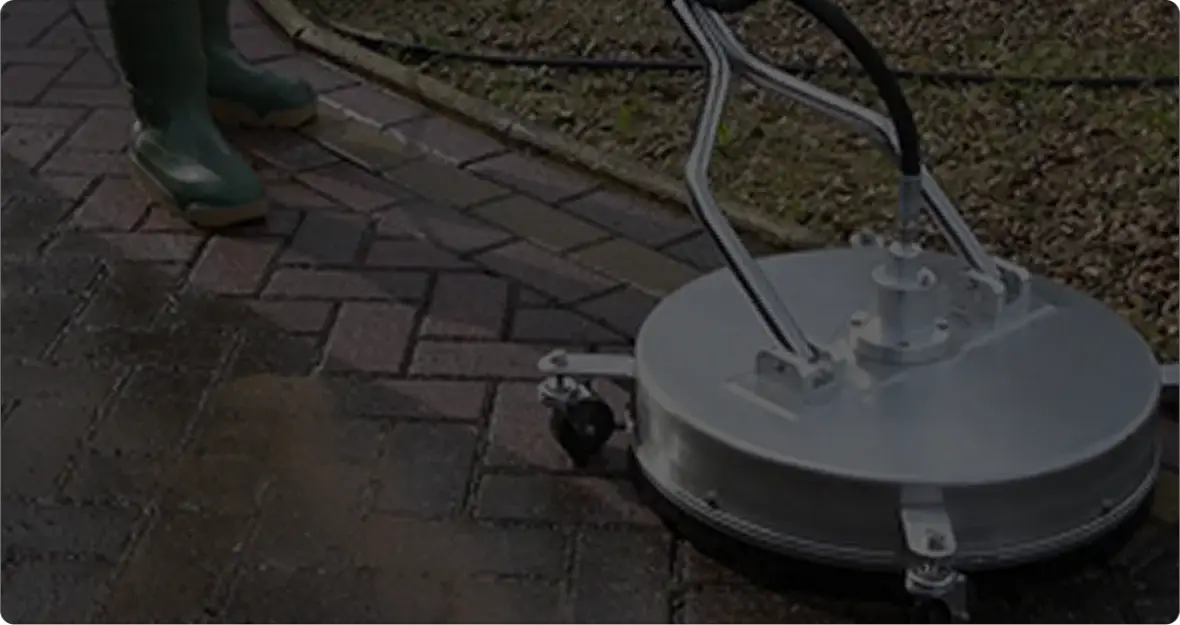
Surface cleaning is the specialist end of pressure cleaning, built for large flat areas. Instead of a hand wand, we use a rotary surface cleaner: spinning jets inside a hood that run at a constant height and distance from the surface. Every square metre gets the same treatment, so the finish is even rather than striped, and the spray stays contained under the hood instead of blasting dirt onto walls, glass and people walking past.
The surface still decides the method. Concrete, exposed aggregate, clay and concrete pavers, natural stone, and sealed or painted finishes all need different pressure and different cleaning products. We pre-treat oil, gum and organic growth before cleaning, and we test a small area first on anything sealed, coated or delicate.
Ground-in dirt and traffic grime, oil and grease stains, tyre marks, chewing gum, mould, moss, algae and lichen, food and drink spills, leaf and tannin stains, and the dark build-up that makes a busy walkway look older than it is.
A clean surface is the best time to seal it. Sealing slows down how quickly oil, food, drink and water soak into concrete, pavers and stone, so spills sit on top long enough to be cleaned up, and the next clean is quicker and cheaper.
We seal once the surface has been cleaned and has dried properly, because sealing over moisture or dirt locks it in. The right sealer depends on the surface, how much traffic it takes and the finish you want, so we’ll recommend one at the inspection and include it in the quote. Sealing is optional — plenty of sites just want the clean.
Building forecourts and entries, plazas and courtyards, footpaths and walkways, outdoor dining and paved common areas, pool surrounds, apartment complex common property, school and university grounds, council and public spaces, retail and shopping centre walkways, warehouse and factory hardstands, and end-of-lease and make-good handovers.
We inspect the area, identify the surface and its condition, and flag anything that needs care — loose or lifting pavers, cracked concrete, failing sealer or existing damage. On sealed, coated or delicate surfaces we test a small area first.
Then: pre-treat oil, gum and organic growth and allow it to dwell, clean the area with a rotary surface cleaner at the right pressure for the surface, detail edges, steps and corners by hand, and contain and remove the run-off where necessary. If you’ve asked for sealing, it goes on once the surface is properly dry.
Work can be done during or after hours, overnight or on weekends to suit your site, with signage and exclusion zones in place where the public has access. We use safe products suitable for occupied buildings and public areas.
One-off cleans for end-of-lease, make-good, pre-sale or pre-opening, or a surface that’s been let go.
Scheduled programs — quarterly, biannual or annual, with more frequent attention to entries, outdoor dining areas and shaded paving where growth returns fastest.
Surface cleaning is a type of pressure cleaning designed for large flat areas. A rotary surface cleaner holds the jets at a fixed height and distance from the ground, so the whole area gets an even clean with no stripes, and the spray stays under the hood. For walls, facades, roller doors and other vertical surfaces, see our pressure cleaning service.
Most of them. A degreaser left to dwell lifts far more oil than water pressure on its own. Oil that has soaked into porous concrete or pavers over years may leave a shadow even after a proper clean. We’ll tell you what to expect before we start rather than after.
Not necessarily. Sealing is worth it on areas that take a lot of spills or traffic — outdoor dining, entries, pool surrounds and anywhere oil drips — because it slows staining and makes future cleans easier. We’ll give you an honest recommendation at the inspection.
Not when the pressure and method are matched to the surface. We identify the surface first and test on anything sealed, coated or delicate. On pavers, we keep the cleaner moving so joint sand isn’t blasted out, and we’ll flag it if your joints are already loose or need re-sanding.
After cleaning, as soon as it’s dry — usually within a few hours depending on the weather. If we’re sealing, we’ll let you know the cure time for the product in the quote so you can plan access around it.
It depends on the size of the area, the surface type, how heavy the build-up is, access and working hours, whether run-off needs to be contained, and whether you want the surface sealed. We inspect the site and give you a free, fixed quote before any work starts.
Enter your details. We’ll call you back to discuss your needs.