
Car Park Cleaning Melbourne
Most car parks get sweeping when they needed scrubbing, or just pressure cleaning when the oil needed a degreaser. The wrong method can cost you a day of access and leaves the stains exactly where they were.
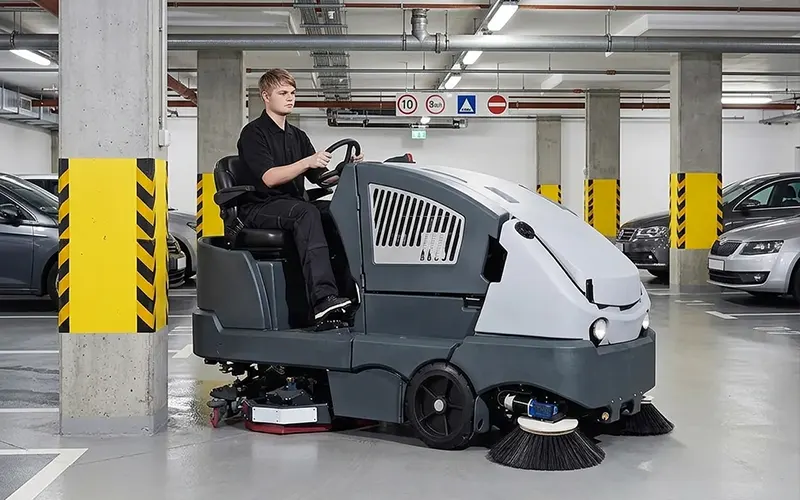
We clean commercial and industrial car parks across Melbourne metro — open decks, multi-level structures and basements. Ride-on sweeping and scrubbing for the parking areas, high pressure and degreaser for oil, ramps and bin rooms, and staged access so the site keeps operating while we work.
What Car Park Cleaning Actually Involves
Three different jobs get lumped under one heading. Sweeping lifts the dry material — grit, leaves, litter, tyre rubber and the fine dust that basements generate endlessly. Scrubbing wets the surface and takes off the film that sweeping leaves behind, which is what makes a basement floor look grey instead of black. High pressure cleaning and a degreaser deal with the oil drips, the bin room and the ramps. Most car parks need at least two of the three, and doing them in the wrong order means doing them twice.
Open decks and basements are also not the same problem. An open deck gets rained on, so the fine material washes away and what is left is largely litter, leaf debris and oil. A basement never gets rained on. Everything that comes off a vehicle stays there and compounds — brake dust, tyre rubber, exhaust residue and oil build into a film that will not come off with a sweeper alone. Basements also come with headroom, ventilation and drainage constraints that dictate which machine can physically be used, which is the part most quotes get wrong before anyone turns up.
What It Removes
Oil and grease drips, tyre rubber and brake dust, general grit and silt, litter and leaf debris, chewing gum, bird and bat droppings, cobwebs and nesting material, moss and algae on shaded ramps and edges, mould on walls and columns, dust film on line marking and signage, cigarette butts and glass, and the odour that builds up in enclosed basements and bin areas.
Where We Clean
Basement and underground car parks, multi-level and split-level car park structures, open-air commercial car parks, shopping centre and retail car parks, office tower and business park parking, warehouse and distribution centre hardstands, hospital, medical centre and aged care car parks, school and university car parks, council and community facility car parks, apartment and strata common property parking, airport and transport interchange parking, and staff and visitor car parks on industrial sites.
Why It’s Worth Doing Properly
- Slip and trip liability: Oil, algae and moss on ramps, walkways and stairwells are genuinely dangerous when wet, and car parks are one of the more common sources of public liability claims against a building owner.
- Basements never self-clean: With no rain to wash them, contaminants accumulate continuously. Leave a basement long enough and the built-up film stops responding to routine cleaning and needs a far more expensive restoration clean instead.
- Drainage and sumps: Silt and debris migrate to the grated drains and sump pits. Once those block, the next heavy rain event or wash-down floods the lowest level, and that is a far bigger bill than the cleaning was.
- First impression and tenant retention: For most buildings the car park is the first thing a tenant, customer or prospective buyer walks through and the last thing they walk back out through. It shapes the view of how the whole asset is managed.
- Run-off compliance: Wash water carrying oil, grease or detergent should not be entering stormwater. We contain and dispose of it appropriately, or direct it to sewer where a trade waste connection exists. That protects you as much as it does us.
How We Work
We inspect the site before we quote. That means measuring headroom and ramp gradients, checking ventilation, locating drains, sumps and water and power access, and identifying anything that needs care — failed line marking, spalling concrete, exposed services, existing damage. That inspection is what determines which machine can actually be used on your site, and it is why our quotes do not change once we arrive.
Then: ride-on sweeping to lift the dry material, ride-on scrubbing where there is a film to remove, degreaser applied and left to dwell on oil-affected bays before high pressure cleaning, detailing by hand on kerbs, columns, corners and stairwells, and containment and removal of run-off where required. Machine selection is matched to the space and its ventilation — an enclosed basement with limited airflow is not the place for every machine on the market.
Work is staged so the site keeps operating. We clean in sections with signage, cones and traffic management in place, and most jobs run overnight, early morning or across a weekend when occupancy is at its lowest. Where a site can be fully closed for a night, we will tell you — it is usually faster and cheaper for you.
One-off cleans — for end-of-lease and make-good, pre-sale or pre-lease presentation, post-construction handover, or a car park that has simply been let go.
Scheduled programs — monthly, quarterly, biannual or annual, with more frequent attention to basements, bin areas, ramps and entries where material builds up fastest. Most facility managers find a regular sweep with a periodic deep clean costs less than repeated one-off restorations.
FAQs
Does the car park need to be closed while you clean it?
We clean in staged sections so only part of the site is out of use at any time, with signage, cones and traffic management in place. Most jobs run overnight, early morning or on a weekend. If your site can be fully closed for a night, say so — it is generally faster and cheaper.
Will a ride-on sweeper fit in our basement carpark?
Usually, yes. Australian basement carparks are typically built to at least 2.1 metres of clearance and ride-on sweepers and scrubbers fit within that. We confirm headroom, ramp gradient and ventilation at the inspection and select the machine to suit — including hand and walk-behind work for low-clearance sections, plant rooms and tight corners.
Can you remove oil stains from the concrete?
Most of them. A degreaser left to dwell lifts far more oil than high pressure water on its own. Oil that has soaked into porous concrete over several years may leave a shadow even after a proper clean. We will tell you what to expect before we quote rather than after we finish.
Where does the wash water go?
Not into stormwater, where it carries oil, grease or detergent. Depending on the site we either contain and collect the run-off for appropriate disposal, or direct it to sewer where there is a trade waste connection. We confirm which applies during the inspection.
How often should a commercial car park be cleaned?
Open decks generally suit quarterly or biannual. Basements and undercover parking need it more often because rain never washes them and material accumulates continuously. High-turnover retail, hospital and shopping centre car parks commonly run monthly sweeping with an annual deep clean.
Do you need access to our water and power?
Site water is usually easiest and we will confirm access at the inspection. Where it is not available we can bring a water trailer. Either way it is factored into the quote up front, so there are no surprises on the invoice.
How much does car park cleaning cost?
It depends on the size of the car park, whether it’s a basement or open deck, how much build-up there is, how many oil-affected bays need degreasing, access and headroom, working hours, and whether run-off needs to be contained. We inspect the site and give you a fixed quote before any work starts — and it won’t change once we arrive. Scheduled programs are usually cheaper than repeated one-off restoration cleans.
Services
Let's Talk
Enter your details. We’ll call you back to discuss your needs.